

Selecting an RFID casino table supplier is one of the most consequential procurement decisions a gaming operation can make. The manufacturer you partner with will influence table performance, regulatory compliance, maintenance costs, and the overall reliability of your floor intelligence for years to come. A poor choice can lead to chronic read errors, costly downtime, and friction with gaming regulators — while the right supplier becomes a strategic asset that supports your operational goals.
Defining Your Requirements Before Engaging Suppliers
Before evaluating any manufacturer, a casino operator must build a clear requirements document. This internal exercise prevents scope creep and ensures that vendor conversations remain focused on measurable criteria rather than marketing claims RFID Blackjack Table.
Start with table volume and layout specifications. How many tables are you equipping — a pilot of five tables or a full-floor rollout of fifty? The scale of your project directly affects which suppliers can meet your timeline and pricing expectations. A boutique manufacturer may deliver excellent craftsmanship but lack the production capacity for a 100-table order within a single quarter.
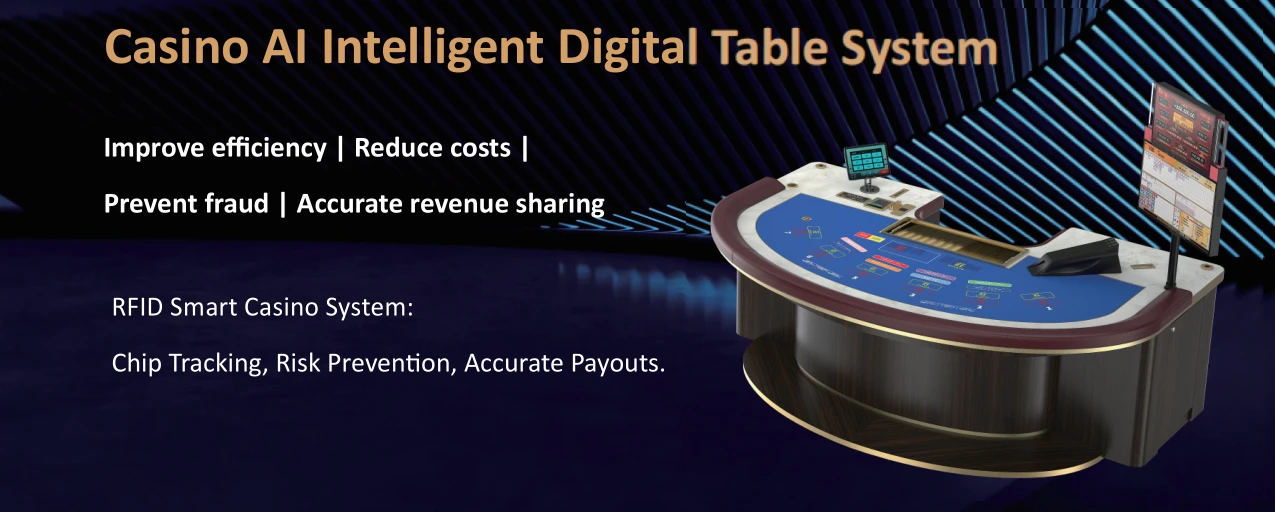
Next, define your chip tracking requirements. Are you tracking bet placement only, or do you need player-level chip attribution across the entire table surface? Full-surface tracking requires denser antenna arrays and more sophisticated signal processing, which not every supplier offers at production scale.
Document your integration requirements as well. Your RFID tables must feed data into your existing casino management system (CMS), player tracking platform, and surveillance infrastructure. Suppliers that cannot provide open APIs or proven integration with your specific CMS vendor should be deprioritized early in the selection process.
Evaluating Technical Capabilities
The core of any RFID table is its read accuracy. A supplier must be able to demonstrate, under conditions that replicate your live floor environment, that their system achieves the read rates they advertise. Ask for third-party validation data — not just internal lab results.
Key technical questions to ask every supplier:
– What is the sustained read accuracy rate during peak gameplay (six to seven players, high chip density, frequent bet movements)?
– How does the system handle chip stacking and overlapping bets?
– What is the read latency — the time between a chip being placed and the data appearing in the backend?
– How does the antenna design minimize dead zones across the table surface?
– What is the mean time between failures (MTBF) for the embedded hardware?
A supplier that cannot provide straight answers to these questions, backed by documented test data, is a liability. Read accuracy below 99 percent in a live environment creates reconciliation problems that erode the entire business case for RFID investment.
Manufacturing Quality and Consistency
Casino tables endure physical punishment — drinks spilled on felt, players leaning on rails, constant chip movement, and periodic deep cleaning. The RFID components embedded beneath the surface must survive this environment for years without degradation.
Evaluate the supplier’s manufacturing process directly. Request a factory tour or a detailed video walkthrough of their production line. Look for:
– Consistent antenna embedding techniques that prevent signal drift over time
– Protective layers between the antenna array and the table surface that do not attenuate RFID signals
– Quality control checkpoints at each stage of assembly, not just a final inspection
– Documented soldering and connection standards for the internal wiring harness
A manufacturer that builds each table by hand without standardized procedures will produce inconsistent results. One table may perform flawlessly while an identical model from the same batch exhibits dead zones or intermittent failures. Consistency matters more than peak performance when you are deploying dozens of tables across a gaming floor.
Regulatory Compliance and Jurisdictional Experience
Gaming jurisdictions have different rules about what electronic systems can and cannot do at a table. Some jurisdictions require that RFID data be treated as supplementary information only, not as the basis for game outcome decisions. Others have specific requirements about data retention periods, system auditability, and the physical security of embedded electronics.
A supplier with experience in your specific jurisdiction will have already navigated these regulatory requirements. They can provide pre-built compliance documentation, field approval letters from gaming commissions, and reference installations that regulators can inspect. This experience dramatically shortens the approval timeline for your project.
Ask potential suppliers to list the jurisdictions where their tables are currently approved and operational. Contact operators in those jurisdictions and ask about their experience working with the supplier through the regulatory approval process. A supplier that claims broad jurisdictional coverage but cannot provide verifiable references is overstating their reach.

Post-Sale Support and Service Infrastructure
RFID tables are not install-and-forget systems. They require calibration, firmware updates, occasional hardware repairs, and responsive technical support when issues arise on the live floor. The supplier’s service infrastructure is as important as the product itself.
Evaluate the following support dimensions:
– What is the guaranteed response time for a critical failure (a table going completely offline during peak hours)?
– Does the supplier maintain spare parts inventory in your region, or will replacement components ship from overseas?
– Are firmware and software updates included in the purchase price, or do they require a separate support contract?
– Does the supplier provide on-site technical training for your maintenance staff?
– Is remote diagnostic capability built into the system, allowing the supplier to troubleshoot without dispatching a technician?
A supplier with a robust support infrastructure may charge a premium, but the cost difference becomes negligible when you factor in avoided downtime. A single table offline for three days during a holiday weekend can cost more in lost revenue than the entire annual support contract Macaumr RFID Solutions.
Financial Stability and Longevity
Casino operators make multi-year commitments when they deploy RFID tables. The hardware is expected to last seven to ten years, and the software ecosystem must be maintained and updated throughout that period. A supplier that goes out of business two years into your deployment leaves you with orphaned technology.
Investigate the supplier’s financial health. Request audited financial statements or credit reports. Look at their customer concentration — a supplier that depends on two or three large contracts for most of its revenue is more vulnerable to a single client loss triggering a business failure.
Consider the supplier’s ownership structure as well. A privately held company with deep industry roots may be more stable than a venture-backed startup chasing rapid growth, even if the startup’s technology appears more innovative on paper. Stability matters more than feature flash when you are betting your floor operations on a vendor’s long-term viability.
The Selection Process: A Structured Approach
Avoid making supplier decisions based on a single sales presentation. Instead, implement a structured evaluation process:
1. Issue a detailed Request for Information (RFI) to five to eight qualified suppliers
2. Narrow the field to three finalists based on written responses
3. Conduct on-site demonstrations at each finalist’s facility or at a reference customer site
4. Run a paid pilot with one or two tables from the top two finalists on your own floor
5. Evaluate pilot results against your predefined success criteria before committing to a full rollout
This process takes three to six months, but it dramatically reduces the risk of a costly misstep. The pilot phase is especially valuable — it reveals how the supplier performs under real conditions, not just in a controlled demo environment.
Frequently Asked Questions
What is the minimum order quantity most RFID table suppliers require?
Minimum order quantities vary significantly by manufacturer. Large-scale producers may set a minimum of ten to twenty tables per order to justify production setup costs. Smaller boutique manufacturers may accept orders as low as two to five tables, particularly for pilot programs. Negotiate MOQs during initial discussions, and consider whether the supplier’s minimums align with your phased rollout strategy.
How long does it typically take from placing an order to receiving fully operational RFID tables?
Lead times range from eight to sixteen weeks depending on order volume, customization requirements, and the supplier’s current production schedule. Highly customized tables with unique layouts or specialized antenna configurations may require twelve to twenty weeks. Always build a buffer into your project timeline, and confirm production milestones in the purchase contract.
Should we prioritize a supplier’s technology or their regulatory experience?
Both are critical, but regulatory experience should be weighted heavily if you operate in a stringent jurisdiction. A technologically superior table that cannot gain regulatory approval is useless. In practice, the best suppliers combine strong technical performance with proven regulatory track records. If you must choose, prioritize the supplier that can get your tables approved and operational on your timeline.
Can we switch suppliers after an initial deployment if we are unsatisfied?
Switching suppliers mid-deployment is possible but costly. Different suppliers use different antenna architectures, communication protocols, and backend software. Migrating from one supplier’s ecosystem to another typically requires new hardware, software reintegration, and fresh regulatory approvals. The switching cost can approach the original purchase price, which makes thorough upfront evaluation essential.
What warranty terms should we expect from a reputable RFID table supplier?
Standard warranty terms range from one to three years for hardware components, with some suppliers offering extended warranties at additional cost. Look for warranties that specifically cover the embedded RFID system, not just the table structure. Key warranty provisions should include replacement of defective antenna arrays, repair of internal wiring, and software bug fixes. Negotiate service-level agreements that define maximum repair timelines and penalty clauses for missed commitments.